
Every child deserves to play. Not just access to a toy - but the kind of deep, joyful, open-ended play that builds confidence, sparks creativity, and connects kids with each other and the world around them.
At Toyworld, that belief sits at the heart of everything we do. We hand-pick toys that welcome every child - regardless of ability, background, sensory need, or learning style. Because when play is truly inclusive, every child wins.
✔ Parent reassurance: Every toy in this guide has been chosen for its ability to engage children of different abilities and backgrounds. These are toys that grow with your child, welcome all kinds of learners, and are trusted by educators, therapists, and families across Australia.
What Is Inclusive Play - and Why Does It Matter?
Inclusive play means creating opportunities for children of all abilities, backgrounds, and sensory needs to play together - on equal footing. It breaks down barriers, builds empathy, and teaches children from a young age that difference is something to celebrate, not fear.
As Inclusive SA puts it: "All children should be able to access and play on an equal footing - so important for all socialisation."
The research backs this up. Children who engage in inclusive, open-ended play develop stronger:
- Communication and language skills
- Empathy and emotional intelligence
- Problem-solving and creative thinking
- Social confidence and friendship-building
- Fine motor skills and sensory processing
And here's the thing - the best inclusive toys aren't just good for children with additional needs. They're better for every child. Open-ended, imaginative, sensory-rich play benefits all kids, all the time.
Why Open-Ended Play Is the Gold Standard
Open-ended play - where there's no single "right" outcome - is where the real magic happens. When a child can build, create, imagine, and invent freely, they're not just playing. They're learning.
School-day scenario: After a long day of structured classroom learning, children need to decompress. Open-ended toys give them the freedom to process their day on their own terms - building something, creating a story, or simply exploring with their hands. It's how kids make sense of the world.
The toys below are chosen specifically because they support this kind of learn-through-play experience - and because they welcome every child to the table.
🧩 Our Top Inclusive Toys for Open-Ended Play
1. Jellycat - Imaginative Play with a Whole Lot of Heart

Jellycat plushies are more than just irresistibly soft - they're characters waiting for a story. Whether it's a whimsical bunny, a quirky avocado, or a fantastical creature, Jellycat toys spark the kind of open-ended imaginative play that builds storytelling skills, emotional expression, and empathy.
What makes Jellycat particularly wonderful for inclusive play is their universal appeal. Every child - regardless of age, ability, or background - can connect with a soft, friendly character. There's no right or wrong way to play. Children assign personalities, invent adventures, and create their own worlds entirely on their own terms.
Why parents love them:
- Deeply comforting for children with anxiety, sensory sensitivities, or emotional regulation challenges
- Spark storytelling, role play, and imaginative world-building
- Accessible to children of all abilities - no instructions, no barriers
- A gentle tool for emotional conversations and processing big feelings
- Loved equally by toddlers and older children
School-day scenario: Your child comes home from a big day feeling overwhelmed. They curl up with their Jellycat and start telling it about their day - processing emotions, practising language, and self-regulating through the comfort of imaginative play. That's learn-through-play at its most natural.
Parent tip: Use Jellycat characters as a gentle bridge for emotional conversations. "What do you think Bashful Bunny is feeling today?" can open up a world of dialogue with even the quietest child.
Browse our full Jellycat range here.
2. Magna-Tiles - Open-Ended Building for Every Mind

Magnetic building tiles are one of the most genuinely inclusive toys available - and Magna-Tiles are the gold standard. There's no instruction booklet, no "right" build, no failure state. Children simply connect, create, and explore.
This open-ended design makes Magna-Tiles accessible to children across a wide range of abilities. A child with fine motor challenges can connect large tiles with satisfying magnetic clicks. A child with autism can explore the translucent colours and geometric patterns. A neurotypical child can build a towering castle. They can all play together - and they will.
Developmental benefits:
- Spatial reasoning and early STEM thinking
- Fine motor development through hands-on building
- Colour recognition and pattern exploration
- Collaborative and independent play - equally rewarding
- Sensory engagement through translucent tiles and satisfying magnetic feedback
School-day scenario: A mixed group of kids - different ages, different abilities - sit down with a set of Magna-Tiles. Within minutes, they're building together, negotiating, problem-solving, and laughing. No one is left out. That's inclusive play in action.
Learn more about Magna-Tiles at magnatiles.com or shop our Magna-Tiles range here.
3. Building Blocks - Simple, Timeless, Universally Accessible
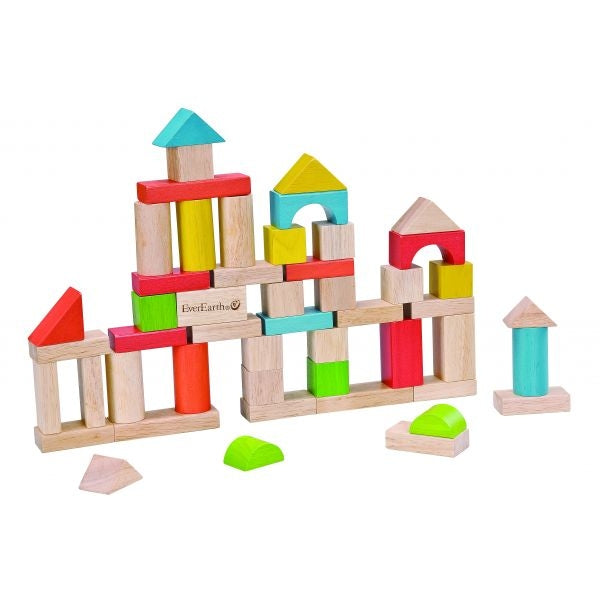
Few toys are as universally accessible as a good set of building blocks. Simple, tactile, and endlessly versatile - blocks invite children of all ages and abilities to build, stack, knock down, and start again.
For children with visual impairments, blocks can be chosen with varied textures. For non-verbal children, building together becomes a shared language. For all children, blocks develop creativity, spatial thinking, and the deeply satisfying experience of making something from nothing.
Parent tip: Building blocks are one of the best toys for mixed-age, mixed-ability play. A toddler and a seven-year-old can build side by side - each at their own level, each contributing to a shared world.
Browse our full range of building and construction toys here.
4. Sensory Toys - Play That Meets Every Child Where They Are

Sensory toys are designed to engage the senses - touch, sight, sound, and movement - in ways that are calming, stimulating, or regulating depending on the child's needs. They're particularly valuable for children with sensory processing differences, autism, ADHD, or anxiety, but they're genuinely enjoyable for every child.
Sensory play supports cognitive development, fine motor skills, emotional regulation, and language, all through hands-on exploration. It's learn-through-play at its most instinctive.
School-day scenario: A child who finds the school day overwhelming comes home and reaches for their sensory kit - squishing, stretching, and exploring until they feel regulated and ready to reconnect. That's not just play. That's self-care, learned young.
Accessibility tip: For children with physical limitations, look for sensory toys that can be used at table height or on a tray - so every child can access them independently.
Explore our sensory toy range here.
5. Board Games - Teamwork, Turn-Taking & Togetherness
Board games are a brilliant vehicle for inclusive play. They create structured social interaction - turn-taking, rule-following, strategy, and cooperation - in a format that's fun and low-pressure.
Choose cooperative games (where everyone wins or loses together) for a particularly inclusive experience. These remove the competitive element that can be challenging for some children, and replace it with shared problem-solving and teamwork.
Why they work for inclusive play:
- Clear rules create predictability - reassuring for children who need structure
- Turn-taking builds patience and social awareness
- Cooperative formats welcome children of all abilities as equal contributors
- A great way for families to play together across different ages and abilities
Browse our games and puzzles collection here.
6. Books - Windows Into Every World
Books with diverse characters, stories, and perspectives are one of the most powerful tools for building an inclusive worldview. When children see characters who look like them - or who are different from them - in the pages of a story, it builds both self-worth and empathy.
Look for books that feature characters with disabilities, different family structures, varied cultural backgrounds, and a range of body types. These aren't niche books - they're essential reading for every child.
Explore our books and literacy range here.
🛒 Shop Inclusive Toys at My Toy Kingdom & Toyworld
Every toy in this guide is available at Toyworld - your local, independent toy stores serving families across Lismore, Byron Bay, and regional NSW. We're passionate about play that welcomes every child, and we only stock toys we genuinely believe in.
Ready to build a more inclusive play space at home?
🚚 Fast shipping across Australia | 🏪 In-store at Lismore & Byron Bay | 💚 Independently owned & locally loved
Frequently Asked Questions
What is inclusive play?
Inclusive play means creating opportunities for children of all abilities, backgrounds, and sensory needs to play together - on equal terms. It's about removing barriers so every child can participate, connect, and thrive. Inclusive play benefits all children, not just those with additional needs, by building empathy, social skills, and a genuine appreciation for diversity.
What are the best inclusive toys for children with different abilities?
The best inclusive toys are open-ended - meaning there's no single right way to play with them. Magna-Tiles, building blocks, sensory toys, Jellycat plushies, and cooperative board games are all excellent choices. They welcome children of different ages, abilities, and learning styles, and they grow with your child over time.
What are open-ended toys, and why are they important?
Open-ended toys are toys with no fixed outcome - children can use them in any way their imagination allows. They're important because they support creative thinking, problem-solving, and self-directed learning. They're also naturally inclusive, because there's no "wrong" way to play. Examples include Magna-Tiles, building blocks, Jellycat plushies, sensory materials, and role-play sets.
How do educational toys support creativity in children?
Educational toys for creativity give children the tools to explore, experiment, and invent without a script. When a child builds freely with Magna-Tiles, creates a story with a Jellycat character, or explores textures through sensory play, they're developing spatial reasoning, narrative thinking, emotional intelligence, and problem-solving - all skills that directly support learning at school.
What toys are good for children with sensory processing differences?
Sensory toys - including fidget tools, textured play materials, sand and water play, and light-up or sound toys - are specifically designed to engage and regulate the sensory system. They're valuable for children with sensory processing differences, autism, ADHD, or anxiety, but enjoyable for all children. Look for toys with varied textures, weights, and sensory inputs to suit your child's specific preferences.
Are inclusive toys only for children with disabilities?
Not at all. Inclusive toys are designed to welcome every child - but they benefit all children equally. Open-ended, diverse, and sensory-rich toys build empathy, creativity, and social skills in every child who plays with them. The best inclusive toys are simply the best toys, full stop.
How can I create an inclusive play environment at home?
Start by choosing open-ended toys that don't have a single "right" outcome. Include toys that represent diverse characters and invite imaginative storytelling - like Jellycat plushies. Make sure play spaces are physically accessible - toys within reach, surfaces at appropriate heights. And most importantly, play alongside your child. Your presence and engagement is the most powerful inclusive play tool of all.
Want to keep exploring? Read our guide to inclusive toys that celebrate diversity and encourage empathy, or browse our guide to choosing safe and non-toxic toys for kids.
Play without limits. 🌈